
LIFESTYLE
How to Choose the Right Lighting for Every Room
- September 22, 2026
- 8 min read
- By EverMuse
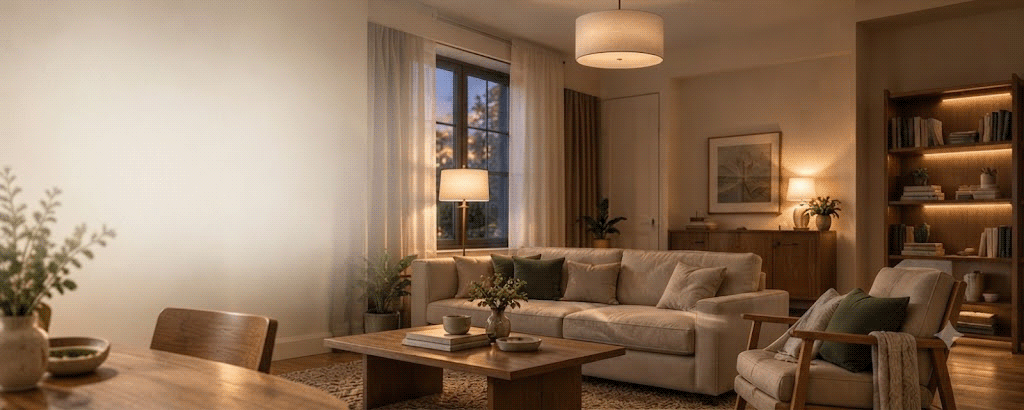
A living room can have beautiful furniture and still feel flat. A kitchen can look bright while the worktop where you chop vegetables sits in your own shadow. A bedroom can be pleasant at noon and harsh at ten at night. A home office can have plenty of light and still be tiring to work in.
Usually the room doesn’t need more light. It needs the right light, in the right place, for what you do there. Pick that out first, and the choice of fixture gets much easier.
Start With What the Room Needs to Do
It’s easy to begin with a pendant you like the look of. It’s more useful to begin with the room and a few questions:
- What do you actually do here?
- Which areas need the clearest light?
- Where would softer light be more comfortable?
- How much daylight does the room get, and does that change through the day?
- Is there any glare or shadow that already bothers you?
Different rooms answer these differently. A dining table needs enough light to see food and faces, but it can also look better when it feels like its own zone in a quieter room. A kitchen needs strong light where you prepare food, though not every surface needs the same intensity. A bedroom needs practical light for getting dressed and something much gentler for reading in bed.
So the question changes from “Which light looks good?” to “What is this light for?”
The Three Layers of Lighting
Most rooms get easier to light once you stop expecting one fixture to do everything.
Ambient lighting is the general light in a room, from a ceiling fixture, recessed lights, wall lights or light bounced off walls and ceilings. It sets the baseline.
Task lighting is aimed at an activity: a reading lamp, desk lamp, under-cabinet strip or the lights around a bathroom mirror. Placement matters more than brightness here. A bright light in the wrong spot, or one that casts your own shadow over the page, isn’t much help.
Accent lighting draws the eye to something, such as artwork, shelves, a plant or an architectural detail. It isn’t essential in every room, but it can add depth when you want to highlight something specific.
The layers don’t have to be three separate fixtures. A floor lamp can provide ambient and reading light at once, and a pendant over an island can do ambient and task duty together. What matters is that the room has more than one way of being lit.
Living Room
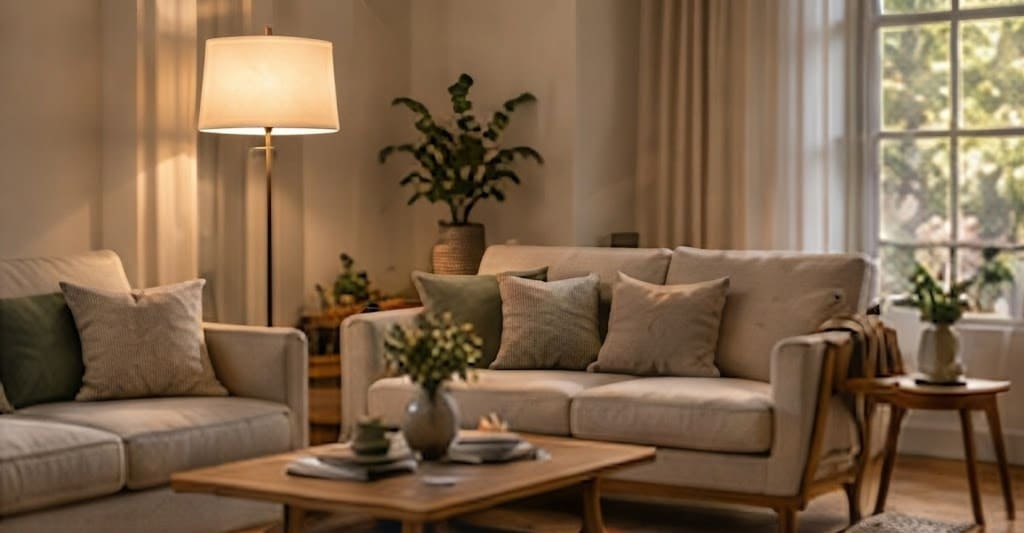
Living rooms do a lot: conversation, television, reading, guests, the occasional tidy-up. A single ceiling light handles that badly.
A workable setup might include a ceiling fixture or another source of general light, plus a lamp or two near the seating, and a reading light by a favourite chair. Accent lighting for shelves or artwork is a bonus. You don’t need all of it. If you’re starting from a single overhead light, one lamp beside the sofa will change the room more than a second ceiling fixture would.
The aim is a room that isn’t equally bright everywhere. It should be able to go from bright enough to clean to comfortable enough to unwind without moving any furniture, ideally with a couple of switches or a dimmer doing the work.

Bedroom
Bedroom lighting should be able to soften as the evening goes on. The ceiling light is useful for making the bed, dressing or hunting through a wardrobe. For reading, a bedside lamp is better because it lights the page without lighting the room.
Wall sconces work well beside a bed if they’re positioned and angled for the reader, and they free up bedside table space. Table lamps are more flexible if you rearrange furniture often, which suits renters. A dimmer, or a bulb that dims, is worth having, since the light you want at 7am isn’t the light you want at 10pm.
There’s no single correct colour temperature for bedrooms. Warm white is common in homes and often feels relaxing, but wall colour, fabrics and daylight all affect what looks comfortable.
Kitchen
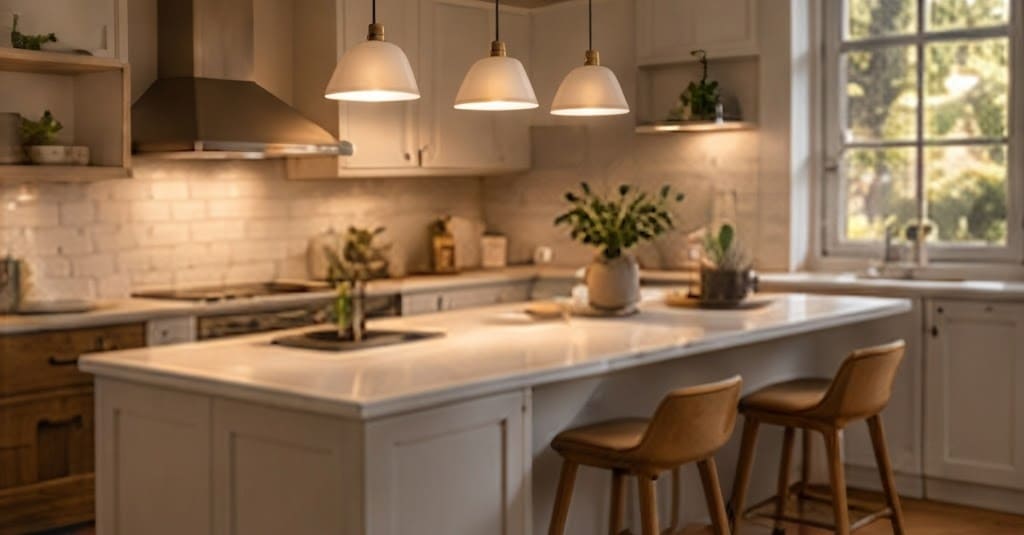
Kitchens often fail in a specific way. The ceiling fixture lights the room nicely, but you stand between it and the worktop, and the wall cabinets shade the rest.
Look at where you actually work: chopping, reading a recipe, washing up. Under-cabinet lighting is one of the most effective fixes because it puts light on the worktop without brightening the whole room. Ceiling or recessed lights cover the general level, and a pendant can mark out an island or breakfast bar.
If you’re choosing between a striking fixture and a plainer one that lights the counter properly, choose the one that lights the counter.
Dining Area
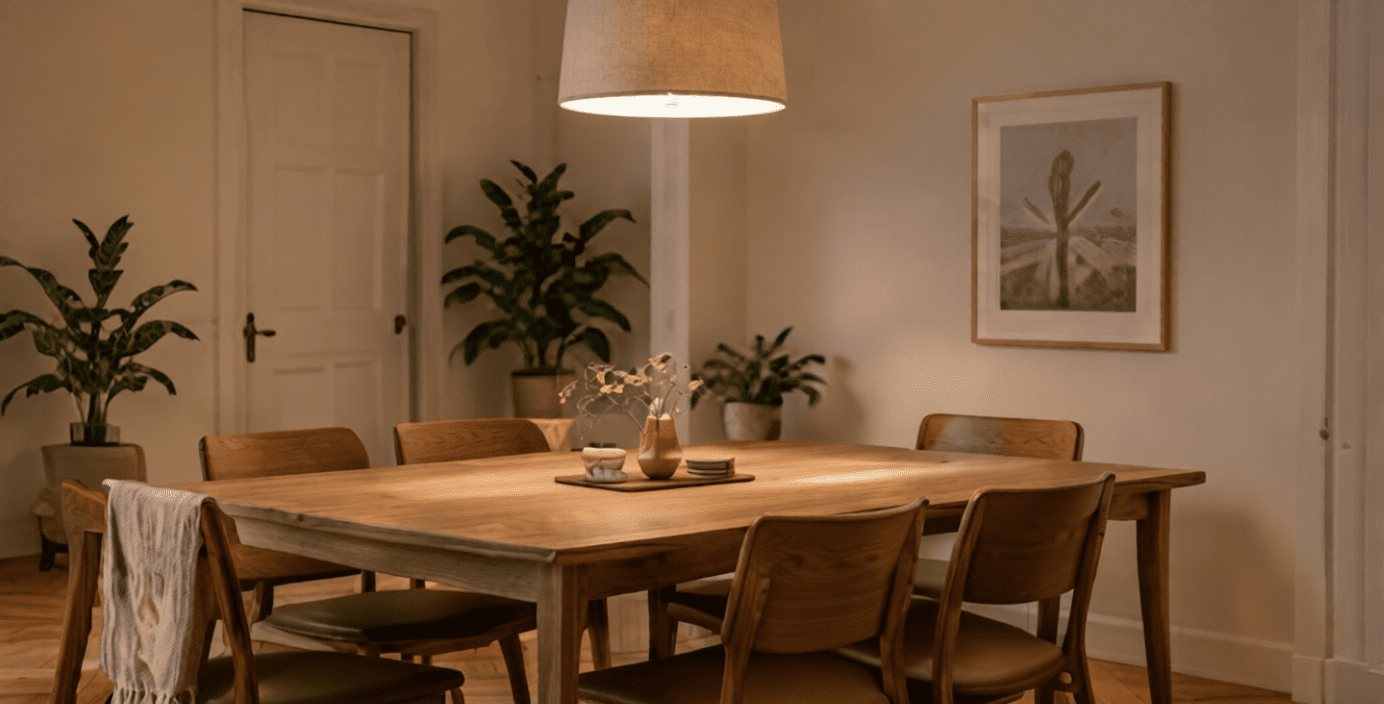
A dining table is a natural focal point, so a pendant or chandelier makes sense in many layouts. The details are where it goes wrong. A fixture that’s too small disappears above a large table, and one that’s too heavy dominates the room. It should also be centred on the table, not wherever the ceiling wiring happens to be.
A dimmer earns its keep here. The same table is used for dinner, homework, laptop work and clearing up, and each wants a different level of light.
Bathroom
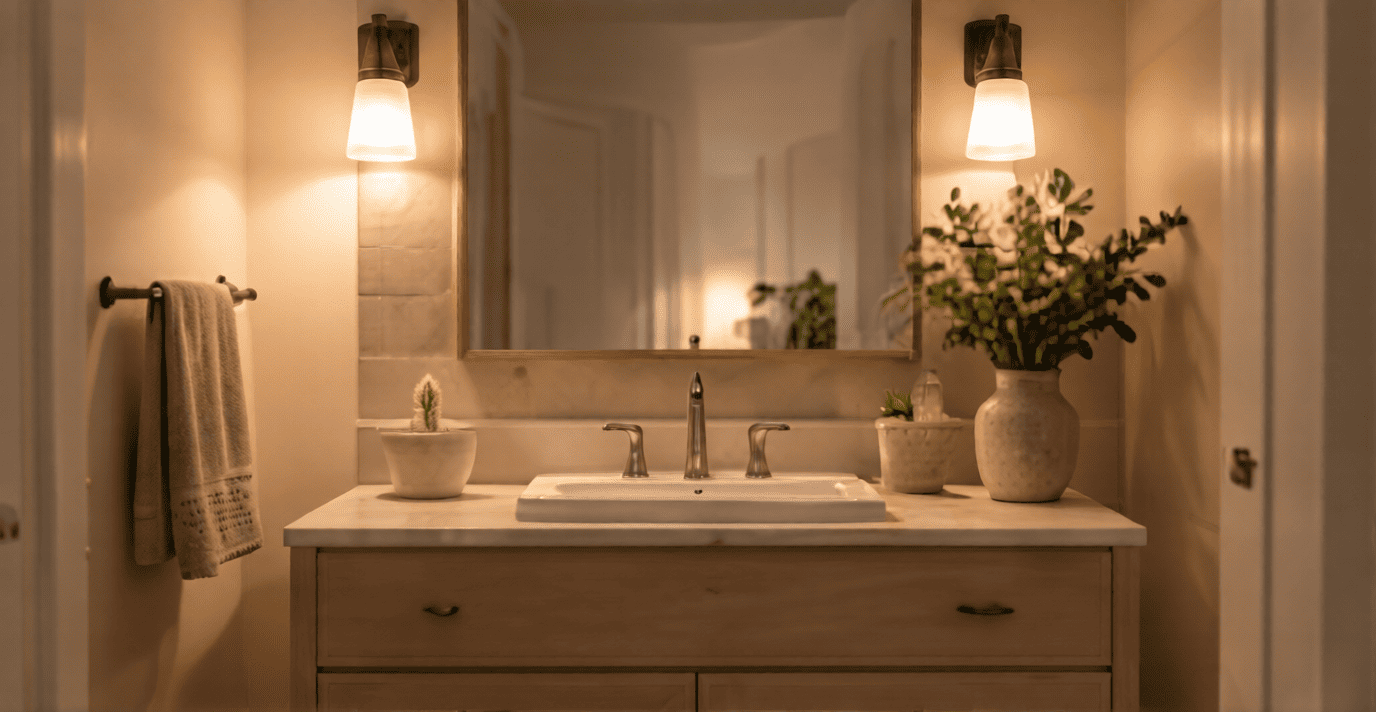
A single light directly overhead can throw shadows across your face, which isn’t ideal when you’re shaving or doing your make-up. Lighting beside or around the mirror gives more even light for close-up tasks than a brighter overhead bulb would.
Bathrooms also have installation and safety requirements, so check what’s allowed for fixtures near water in your area, or ask an electrician, before falling for a particular design. In a small bathroom, aim for easy to use and free of glare rather than as much light as possible.

Home Office
More brightness isn’t always the answer for a difficult desk. Glare and reflections on a screen tire the eyes even in a bright room.
Look at how the desk sits in relation to the window, the screen and the lights. An adjustable task lamp helps because you can redirect it as you shift position. Daylight is welcome, but direct sun on a screen creates its own problem. If the workspace feels uncomfortable, try moving or angling a light before buying a more powerful bulb.
Entryways and Hallways
These are about movement and a friendly first impression, not activities. One ceiling fixture is often enough in a short hallway, and a longer one may need a few sources for even light. Wall lights add interest without using floor space. It’s a good reminder that the fewer things a space is used for, the simpler its lighting can be.
How Bright Is Bright Enough?
Wattage tells you how much power a bulb uses, not how much light it gives. Lumens measure the light. When comparing modern bulbs, check the lumens.
There’s no single lumen figure that suits every room. It depends on the activity, the room size, how light or dark the surfaces are, how much daylight comes in and how the light is spread. Two rooms with the same total output can feel very different if one distributes it well and the other creates glare and dark corners. 📎
Warm or Cool Light
Color temperature is measured in kelvin (K). Lower numbers look warmer and higher numbers look cooler. The U.S. Department of Energy notes that correlated color temperature (CCT) affects the look and atmosphere of a space, and that homes commonly use warm to soft white ranges.
“Warm for bedrooms, cool for kitchens” is too simple, though. A kitchen used mostly for evening cooking may feel best with a warmer light. A home office might benefit from clearer, more neutral light for focused work, while someone else prefers warmer. Wall color, wood tones, fabrics and daylight all play a part.
One practical rule: within a room, keep bulbs consistent. Noticeably different color temperatures side by side look like an accident. 📎
Color Rendering
Two bulbs with the same brightness and color temperature can still make colors look different. That’s color rendering, and CRI is the most common measure. The Department of Energy says a CRI of 80 or above is generally recommended for interior lighting, with 90 or higher indicating very good color fidelity. It also notes that CRI has limitations, and newer measures such as TM-30 give more information.
You don’t need to make a project of it. But if the color of food, clothes, artwork, wood or paint matters to you, check the CRI when comparing bulbs. 📎
Control Can Fix a Light You Already Own
A light that feels wrong doesn’t always need replacing. Sometimes it needs a dimmer, or a shade you can tilt, or a better position. Some LED systems offer color-tuning or dim-to-warm, but check that the bulb, fixture and control are compatible before buying, since not all combinations work.
A simpler fixture with good control is often more useful than an impressive one with a single setting.
Common Mistakes
- Choosing the fixture before the job. A beautiful pendant can’t fix a task-lighting problem.
- Making everything equally bright. Even brightness flattens a room. Some contrast is what makes it feel comfortable.
- Assuming brighter is better. More output without the right direction just adds glare.
- Ignoring position. Where a light sits matters as much as how strong it is.
- Mixing unrelated color temperatures in the same room.
- Forgetting controls in rooms that serve several purposes.
- Buying one light at a time with no thought for the whole room, so each fixture looks fine and the overall result doesn’t.
A Simple Order of Decisions
When a room feels poorly lit, work through four questions:
Purpose → Layer → Place → Adjust
- Purpose: What will you do in this part of the room?
- Layer: Does it need ambient, task, accent light, or a mix?
- Place: Where should the light come from so it helps without creating shadows or glare?
- Adjust: Can the brightness or direction change when the room’s use does?
It also tells you what to do first. If a reading corner is too dark, add or move a task light rather than replacing the ceiling fixture. If the living room feels flat, add a lower light source instead of turning up the central one. If the kitchen worktop is hard to see, light the worktop.
What to Do Before You Buy Anything
Walk through the room at the time of day you normally use it. Notice where you need more visibility, where shadows fall, where reflections are annoying, which areas feel flat and which lights you rarely switch on. Then ask whether moving a lamp or adding a dimmer would solve it.
Make the smallest change that fixes the actual problem. That might be a lamp, a different bulb or rearranged furniture. Occasionally it is a new fixture, but that’s the last option, not the first.